2026-11-09 · Javier Soto
How Winter Rains Lead to Crawl Space Water Damage in Bakersfield
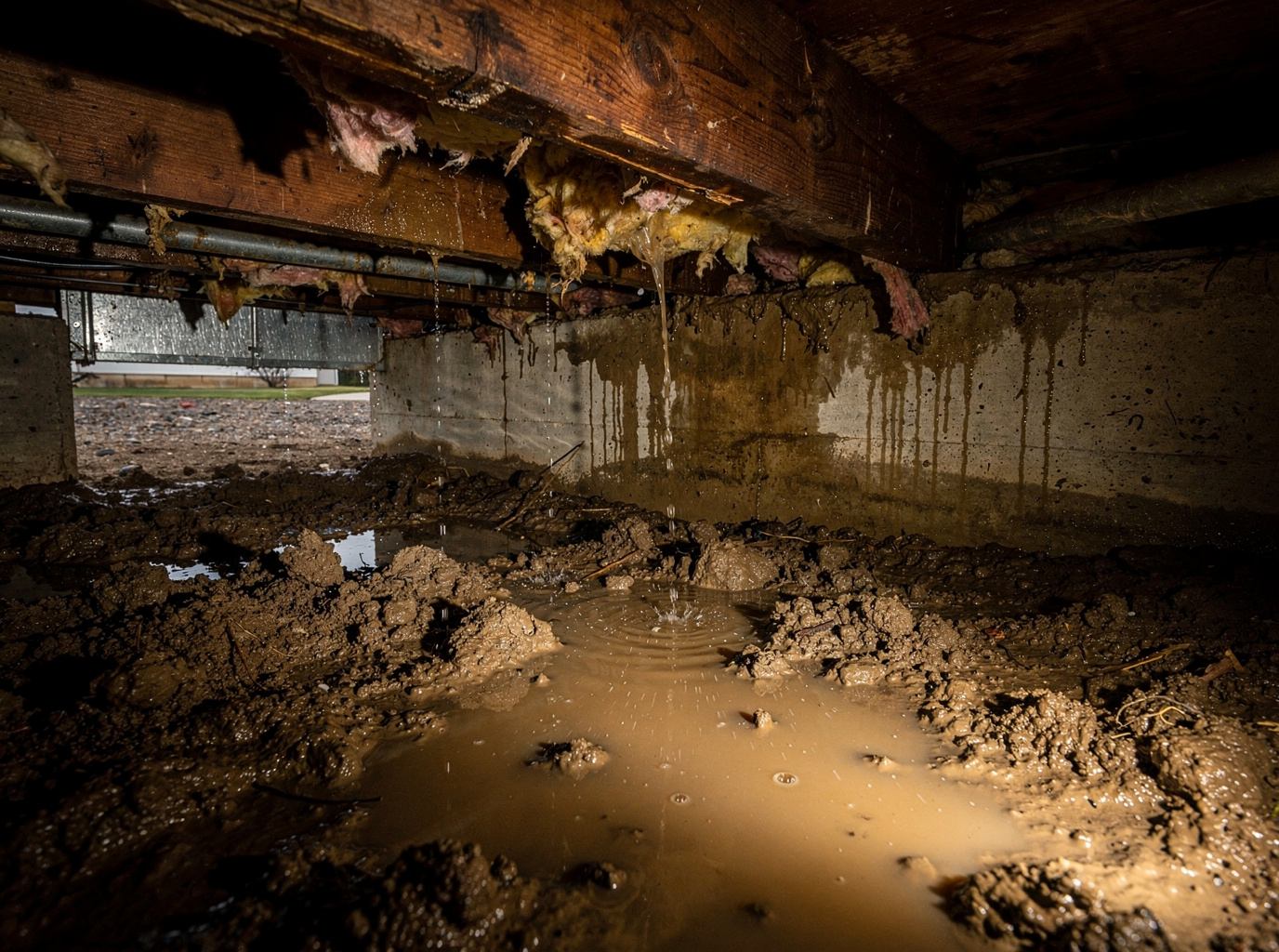
Winter rains in Bakersfield typically lead to crawl space water damage within 24 to 72 hours when heavy downpours exceed the soil's absorption rate in areas with poor grading or older foundations.
Bakersfield Climate and Seasonal Rain Patterns
Bakersfield sits in Kern County with a hot desert climate that features very hot summers and concentrated winter rainfall. These rains often arrive in short intense bursts rather than steady drizzles, overwhelming drainage around homes in Downtown Bakersfield, Rosedale, and Stockdale. The flat terrain common throughout the county allows water to pool near foundations instead of running off quickly. Older housing stock built before modern grading standards sees the most problems because original builders did not account for these seasonal surges. Nearby cities such as Delano, Wasco, and Taft experience similar conditions, though Bakersfield's urban density adds more runoff from paved surfaces.
How Water Enters Crawl Spaces During Winter Storms
Water finds multiple paths into crawl spaces when winter rains hit. In neighborhoods like Oildale, many homes from the mid-20th century have crawl spaces with dirt floors and minimal vapor barriers. Rain saturates the ground and pushes moisture through cracks in stem walls or under sill plates. Poor exterior grading around properties in Rosedale directs flow straight toward vents. Clay-heavy soils common in Kern County hold water against foundations longer than sandy soils would, extending the saturation period. Once inside, the moisture raises humidity levels quickly and can reach wooden joists within days if left unaddressed.
Local Soil and Terrain Factors That Worsen Damage
Kern County's soil composition plays a direct role in how fast crawl space water damage develops. The combination of compacted clay and occasional sandy pockets creates uneven drainage around homes in Stockdale and near the California Living Museum area. During winter events, water sits against footings instead of percolating away, increasing hydrostatic pressure on walls. Homes near Buck Owens Crystal Palace or the Kern County Museum often sit on lots with minimal slope, making them especially vulnerable. This terrain reality means even moderate rain totals of two to three inches can produce standing water under floors when combined with blocked gutters or downspouts aimed at the foundation.
Practical Steps for Bakersfield Homeowners
Homeowners can reduce risk by checking grading around the entire perimeter after each winter storm. Ensure downspouts extend at least five feet from the house and direct flow toward the street rather than side yards. In Oildale properties with older crawl spaces, adding or repairing vapor barriers helps limit moisture rise. Inspect vents for debris buildup that traps humidity. When standing water appears, prompt removal prevents mold growth that typically starts within 48 hours in the region's mild winter temperatures. For detailed guidance on related drying costs, see the Cost Breakdown for Drying Out a Flooded Garage in Bakersfield.
When Professional Water Damage Restoration Becomes Necessary
Persistent moisture that returns after rains requires professional assessment of both the crawl space and surrounding soil conditions. Technicians familiar with Kern County homes know how to dry subfloor structures without trapping humidity that leads to hidden rot. Properties in Rosedale and Stockdale often need targeted extraction equipment sized for the tight access typical of local crawl spaces. Linking to Water Damage Restoration provides further details on the process. Early intervention also protects nearby areas such as Wasco where similar soil and rain patterns exist. Another useful resource is the What to Check After an Irrigation Line Break on Your Property article for overlapping moisture concerns.